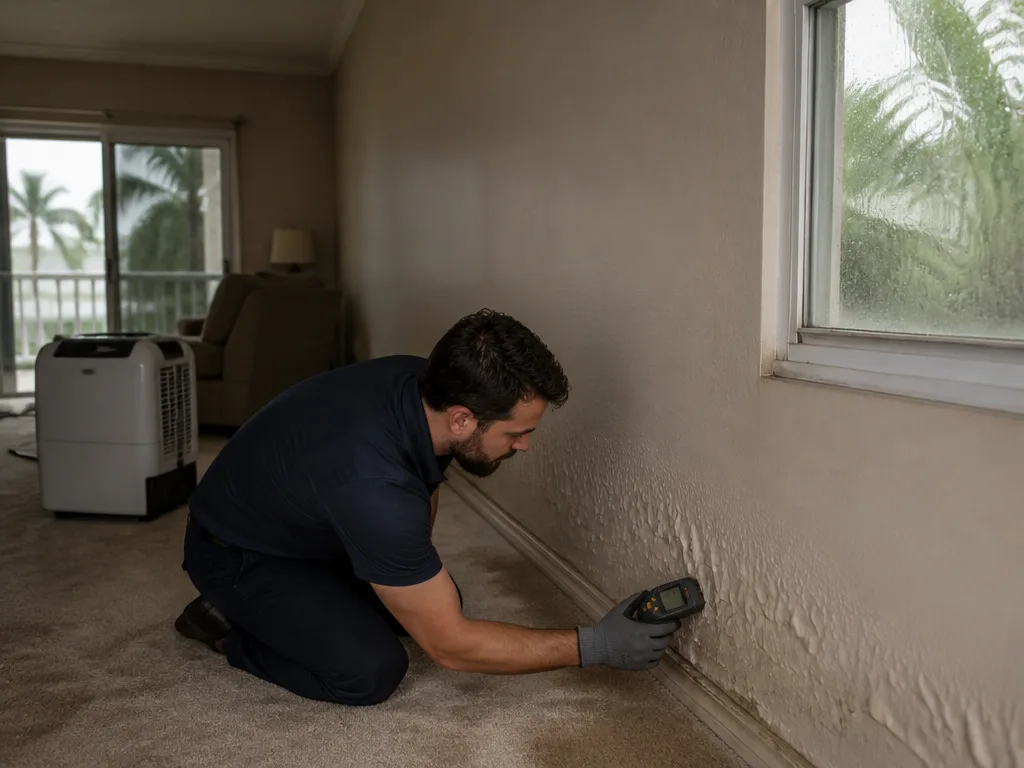
If you own a home anywhere in Florida, you already know the air feels wet most of the year. That moisture is not just uncomfortable. It changes how water moves through a house, how fast materials swell or stain, and how long a drywall cavity can stay damp before mold starts to show up. At Water Mold Miami, our restoration specialists work with Florida homeowners on these problems every week, and the climate is usually the first thing we think about when we walk through the door.
Why Florida humidity makes every leak worse
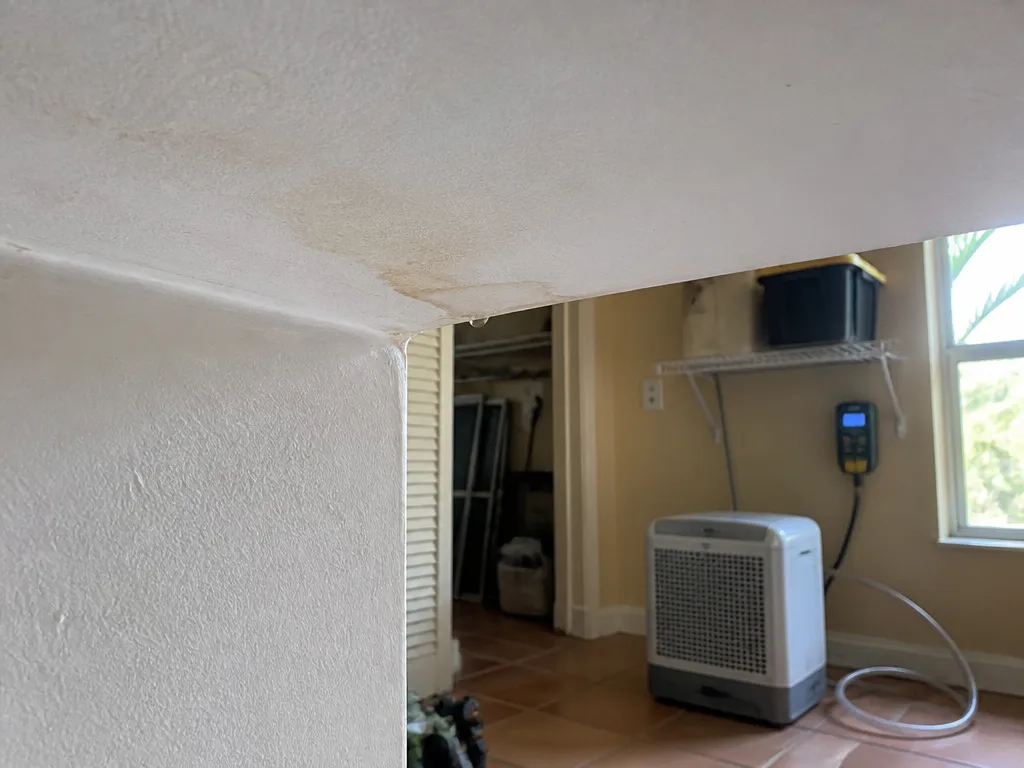
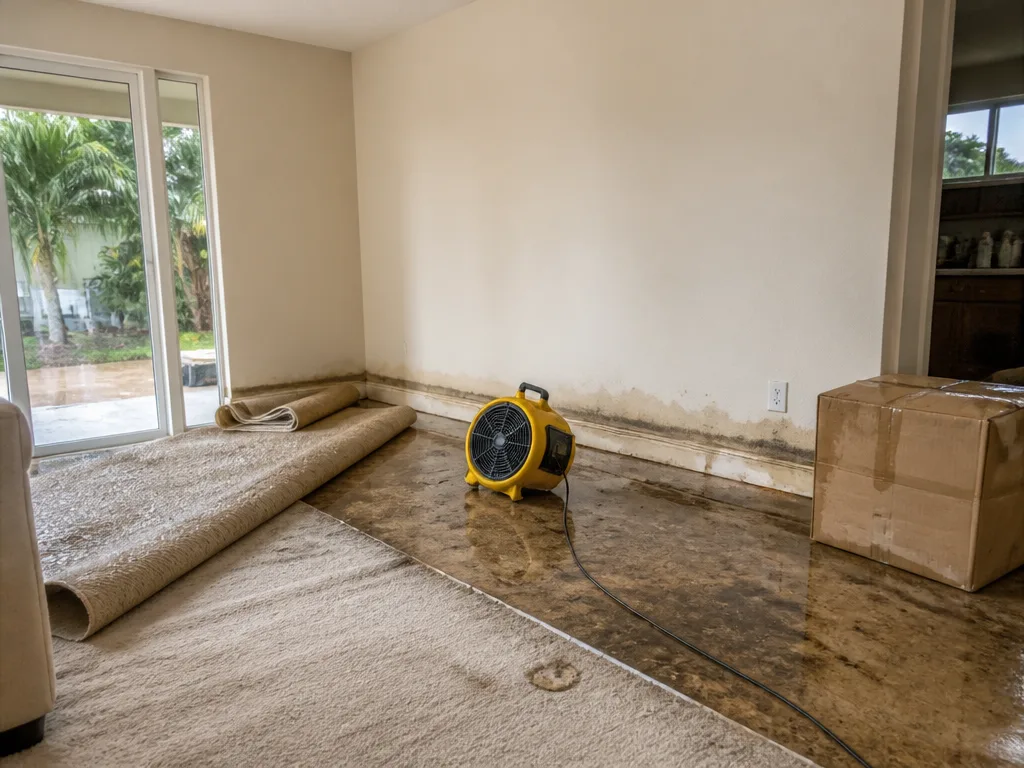
Water damage in a dry state is often a simple problem. Dry the floor, dry the wall, move on. Florida is different. Indoor humidity commonly sits high even on days when the AC is running, and wet materials hold onto that water longer because the air around them is not pulling it out. A baseboard that gets soaked on a Tuesday can still be damp on Friday if the house has been closed up and the dehumidifier is undersized.
Homes across the state also sit on slabs, stucco, and block walls that trap moisture differently than wood-frame houses up north. Water can wick up into the bottom of a wall and sit there for weeks before anyone notices a bubbling paint line. We see this a lot in older ranch houses from the central part of the state and in newer townhomes near the coast, where salt air adds its own stress to finishes.
Watch for these early signs after a humid spell
- A musty smell near closets, under sinks, or behind furniture that sits against an exterior wall
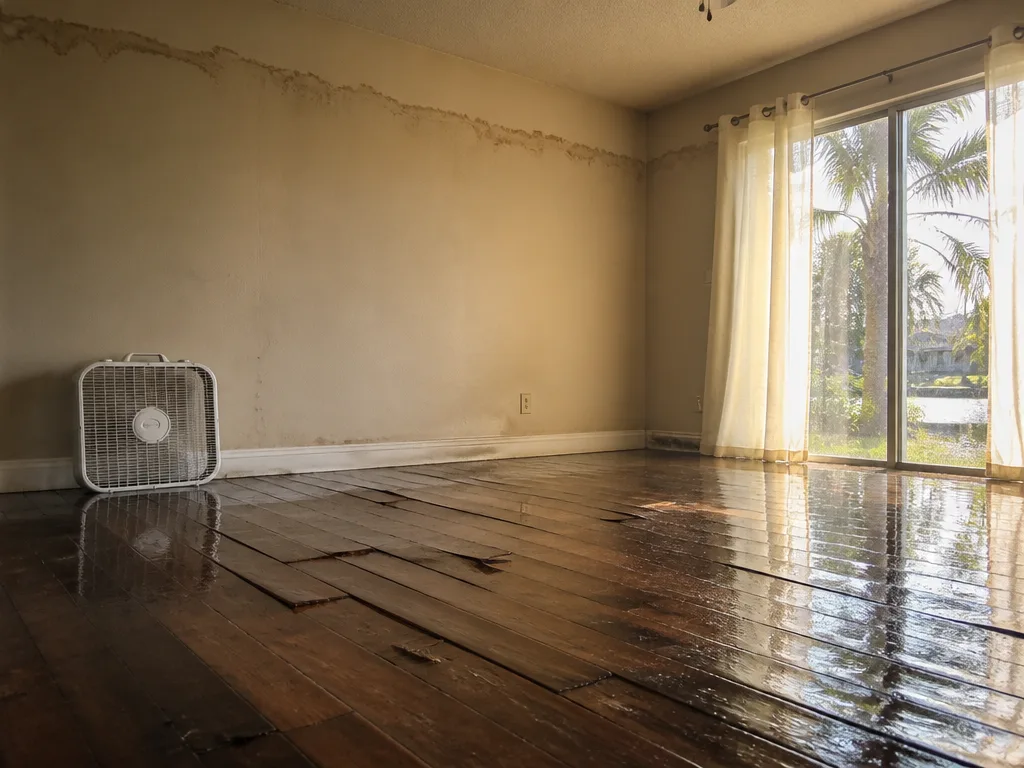
- Paint that looks cloudy or lifts in a straight line about a foot off the floor
- Baseboards that feel soft when you press a screwdriver into them
- Window sills that stay tacky even after a few sunny afternoons
If you see any of these, don't assume the house will dry itself out. Florida air rarely does that on its own.
How the wet and dry seasons change the risk
Most of the state runs on two clear seasons. The wet season usually stretches from late spring into early fall, with heavy afternoon storms that can drop several inches of rain in an hour. Those downpours overwhelm gutters, back up drains, and push water under doors and along the seams of flashing. The dry season, roughly late fall through early spring, brings lower humidity, but it is not a free pass. Cold snaps and sudden fronts can cause condensation inside walls and attics, and sprinkler systems that run on a timer can soak the same spot night after night without anyone noticing.
The timing matters for restoration. A leak that starts during a summer storm often gets worse over the next three or four days because the surrounding air never gets a real chance to dry. A leak that starts in January may be easier to dry out, but the materials can still hold moisture long enough to cause staining. Either way, the sooner the affected area gets proper drying equipment and airflow, the less likely you are to lose flooring, drywall, or cabinet bases.
Practical steps Florida homeowners can take now
You do not need to become a restoration expert to protect your home. A few habits make a real difference across every corner of Florida.
First, check your gutters and downspouts before the wet season starts and again after the first big storm. Make sure water flows at least several feet away from the foundation. Standing water against a slab is one of the most common ways moisture finds its way inside.
Second, keep your indoor humidity in a range that discourages growth. Many Florida homes do well when the house stays somewhere around the lower half of the comfortable range on the thermostat's humidity display, though the exact number depends on your system. If your AC runs constantly but the rooms still feel clammy, ask a qualified HVAC contractor to look at airflow and drainage before you assume the problem is the weather.
Third, pay attention to sprinkler heads and irrigation lines. A cracked head that sprays against a stucco wall can cause damage that stays hidden for months. Walk your yard after each irrigation cycle for the first few weeks of a new season.
When to call a restoration specialist
Call us if water has reached drywall, insulation, flooring, or cabinetry, or if you smell mustiness that does not go away after the area looks dry. Storm season is when our phones ring the most, and that is exactly when homeowners need someone who understands how Florida humidity slows drying and hides damage. Our restoration specialists will look at what is wet, what is starting to grow, and what needs to come out before the house is safe to live in again.
Water Mold Miami serves homeowners across the entire state, so whether you are in the panhandle, the central corridor, or down in the Keys, the approach is the same: find the moisture, dry it properly, and stop the spread. If you are dealing with water damage right now, give us a call. We'll talk through what you're seeing and what the next steps look like for your home.