Florida water damage doesn't follow the rules most people learned up north. We get rain that dumps several inches in an afternoon, humidity that sits at ninety percent for weeks, and homes built on slabs where water finds the lowest seam and settles there. Across Florida, homeowners are working from advice that sounds reasonable and turns out to be wrong. Here are the myths we hear most often at Water Mold Miami, and what is actually true.
Myth: If the floor looks dry, the problem is over
This one catches people constantly. A tile floor can dry on top in a few hours while the subfloor, the baseboards, and the wall cavity behind them stay soaked. Water wicks up drywall about a foot or more above the visible line, and it doesn't care that the room smells fine.
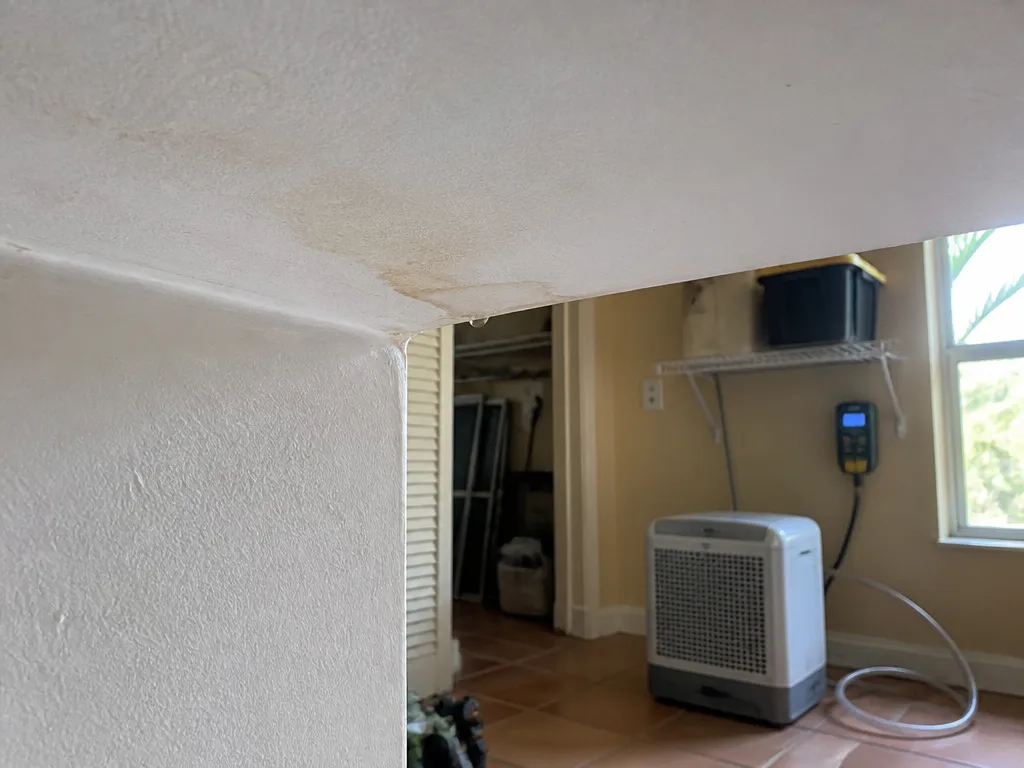
Florida's humidity makes this worse. Damp materials that stay wet for a few days start feeding mold, and mold can show up inside a wall before anyone sees a stain on paint. If you had standing water, pull up a corner of carpet or lift a baseboard and look at the wood underneath. Dark staining, soft spots, or a musty odor behind the wall all mean moisture is still there.
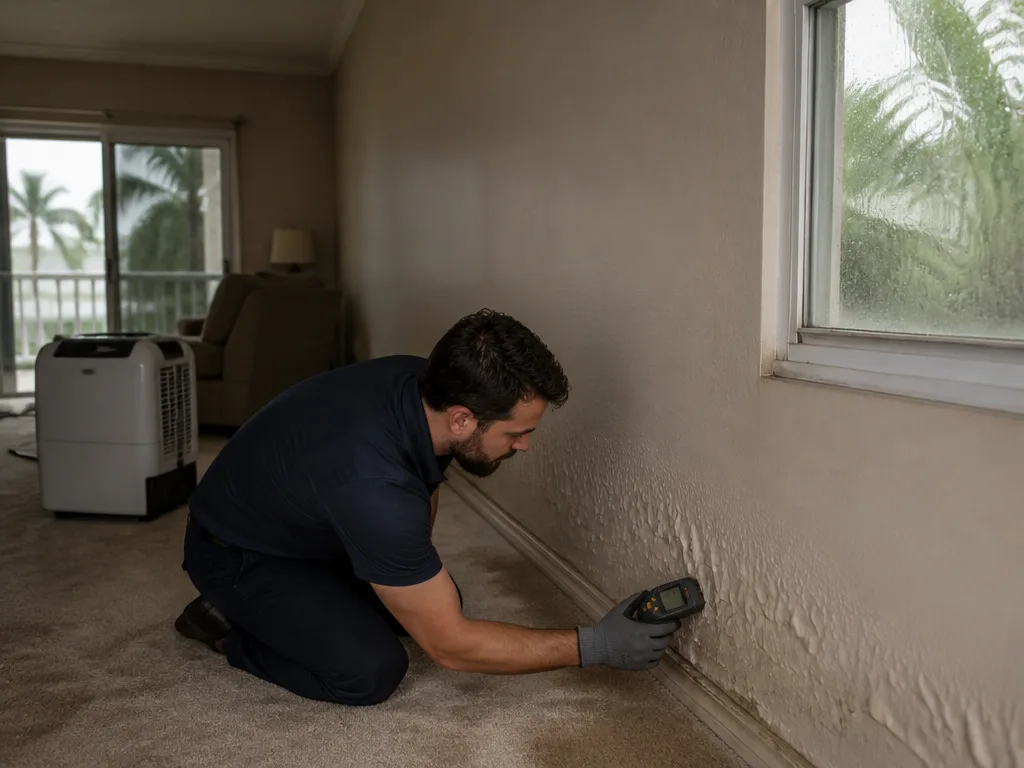
What's true: surface dryness tells you very little. Moisture meters and a proper check of the wall cavities are how restoration specialists confirm a space is actually dry before you close things back up.
Myth: Running fans and the AC for a day is enough
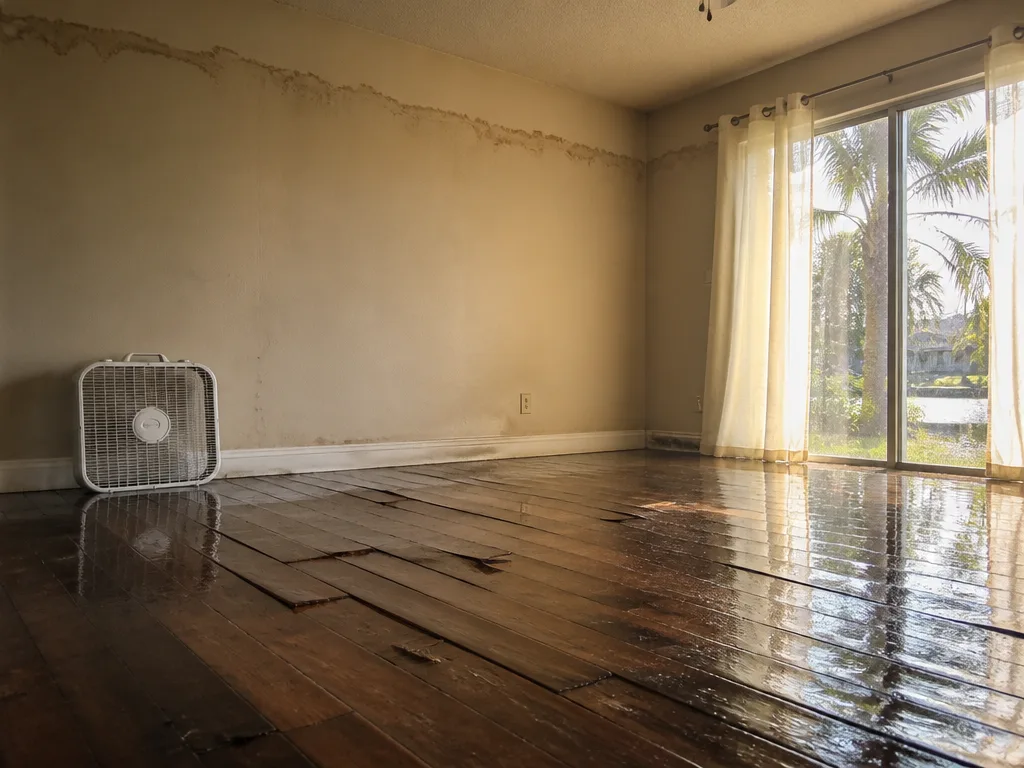
Fans help, but they only move air across the surface. They do nothing for water trapped under flooring or inside insulation. A household box fan pointed at a wet carpet for a day mostly pushes humidity around the house.
Here is what actually works in most Florida homes:
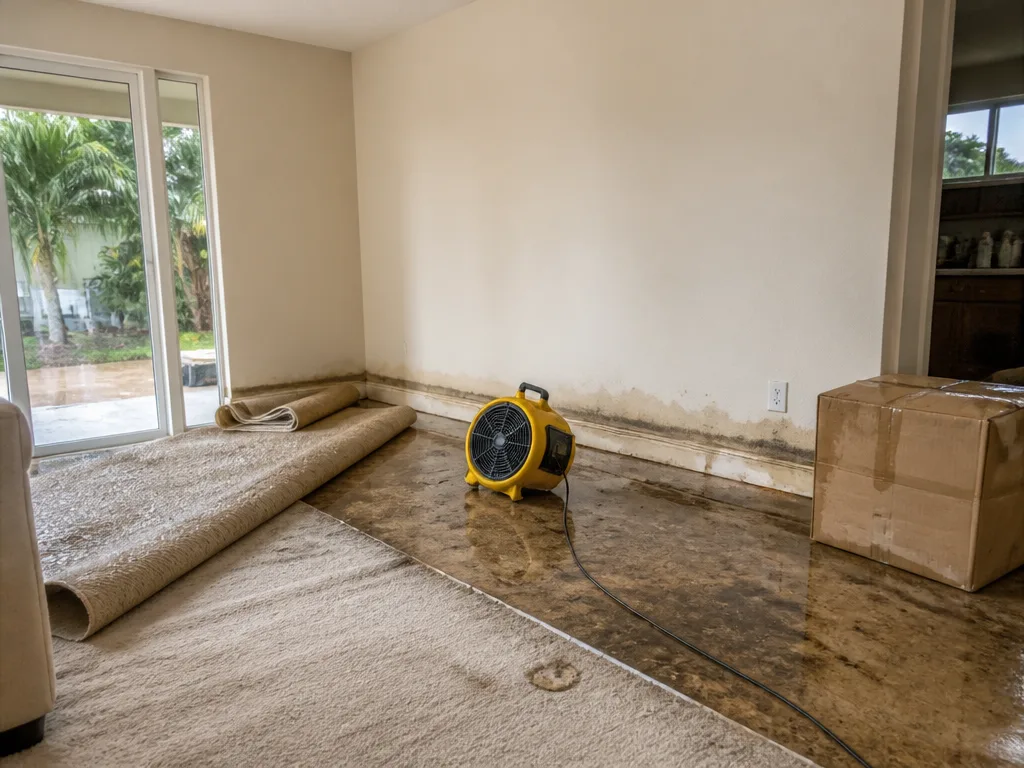
- Remove wet carpet and pad as early as you can, before they start to smell.
- Set up dehumidifiers sized for the square footage, not the largest unit at the hardware store.
- Keep interior doors open so air can move between rooms and closets.
- Track moisture readings over several days instead of trusting how the room feels.
What's true: drying is a measured process. It takes equipment, readings, and patience, and it usually runs longer than people expect, especially in a Florida summer when the outside air is carrying more water than your house can shed on its own.
Myth: Bleach kills mold, so a quick scrub is fine
Bleach looks like it works because the stain lightens. On a nonporous surface like sealed tile, that can be enough. On drywall, wood, or the back of a baseboard, bleach mostly stays on top while the moisture underneath keeps the fungus alive. You end up with a clean-looking surface and a live problem.
Mold also isn't just a spot you can wipe away. Once spores have spread through a wall cavity, the work is removing the affected materials, containing the area so spores don't travel to clean rooms, and then cleaning what can be saved. Scrubbing the visible patch skips all of that.
What's true: if the material is porous and it stayed wet for more than a day or two, it often needs to come out. Restoration specialists make that call by looking at the material and the moisture levels, not by how bad the stain appears.
Myth: Your homeowners policy will cover everything
Coverage depends on the policy and on the cause of the water. Many Florida policies treat flood damage from rising water differently from sudden plumbing failures, and the details of what is covered, and how, can surprise people. We don't speak for your insurer, and we won't tell you what your policy pays. What we can tell you is that keeping records helps you no matter what the answer turns out to be.
Take photos before anything gets moved or thrown out. Write down when the water started, where it came from, and what you did about it. Save receipts for pumps, fans, and dehumidifiers. Those notes make every later conversation easier.
Myth: Waiting until the rain stops is the safe move
In Florida, the rain may keep coming for days, and the water may keep rising in low spots. Waiting for a calm forecast before you act usually means the drywall stays wet longer and the mold gets a head start. Stay out of standing water if it's near outlets or your electrical panel, and if you're not sure it's safe, call a professional and get out of the way.
Once it's safe, start with the basics: photos, shutting off power to flooded areas if you can do it safely, and moving valuables to higher ground. Then get a restoration specialist out while the materials are still salvageable.
What to do if you're dealing with water right now
Florida homeowners tend to wait because they're hoping the damage is smaller than it looks. Look at the wall, not just the floor. Check the baseboards with a flashlight. If the water reached drywall, plan on the wall being opened up and checked.
Water Mold Miami serves homeowners across Florida, from the panhandle to the keys, and our restoration specialists work wherever you are in the state. We do the job by phone: call us, describe what happened, and we'll talk through the next steps for your situation. The sooner you call, the more of your home you usually keep.